
High Protein Breakfasts for Gallbladder Health and Weight Loss


High protein breakfasts can support weight loss and stay gentler on your gallbladder. However, you’ll want to keep fat moderate. To do that, choose easy-to-digest proteins and skip greasy “breakfast bombs” first thing. Specifically, aim for 25–35g protein with roughly 5–12g fat. In practice, I build it around egg whites, low-fat dairy, oats, fruit, and lean poultry or fish. When I’m trying to keep things calm, I’ll stick to meals that are warm, simple, and not swimming in oil.
Here’s the quick why: your gallbladder stores bile, and bile helps digest fat. So, a very high-fat breakfast can cause a stronger contraction. For some people, that can trigger discomfort. On top of that, lots of folks don’t realize “healthy fats” can still be too much at once. Think avocado, nuts, or butter coffee. If you’re dealing with gallstones or biliary colic, it’s often the fat load per meal that matters most.
I’ll be honest: once I started weighing protein portions for a couple weeks, my breakfasts got more consistent. Plus, a simple digital food scale makes it easier to hit your target. You won’t accidentally double fat as often. That mistake can happen fast with “small” add-ons like cheese and nut butters. Also, it’s a sneaky-good way to keep calories in check, so you don’t feel like you’re dieting.
Why can high-fat breakfasts trigger gallbladder symptoms?
Fat stimulates the release of a hormone called cholecystokinin (CCK). In turn, CCK signals the gallbladder to contract and release bile. As a result, a high-fat meal can lead to stronger contractions. Think sausage-bacon-cheese combos, buttery pastries, or heavy cream drinks. For people with gallbladder disease, that can mean discomfort. Meanwhile, lower-fat meals tend to feel easier because they need less bile output.
Notably, the National Institute of Diabetes and Digestive and Kidney Diseases (NIDDK) calls gallstones a common digestive condition. It also explains how the biliary system works. If you want the medical context, it’s a solid plain-English overview. NIDDK gallstones overview. For additional background, you can also see Cleveland Clinic: Gallstones.
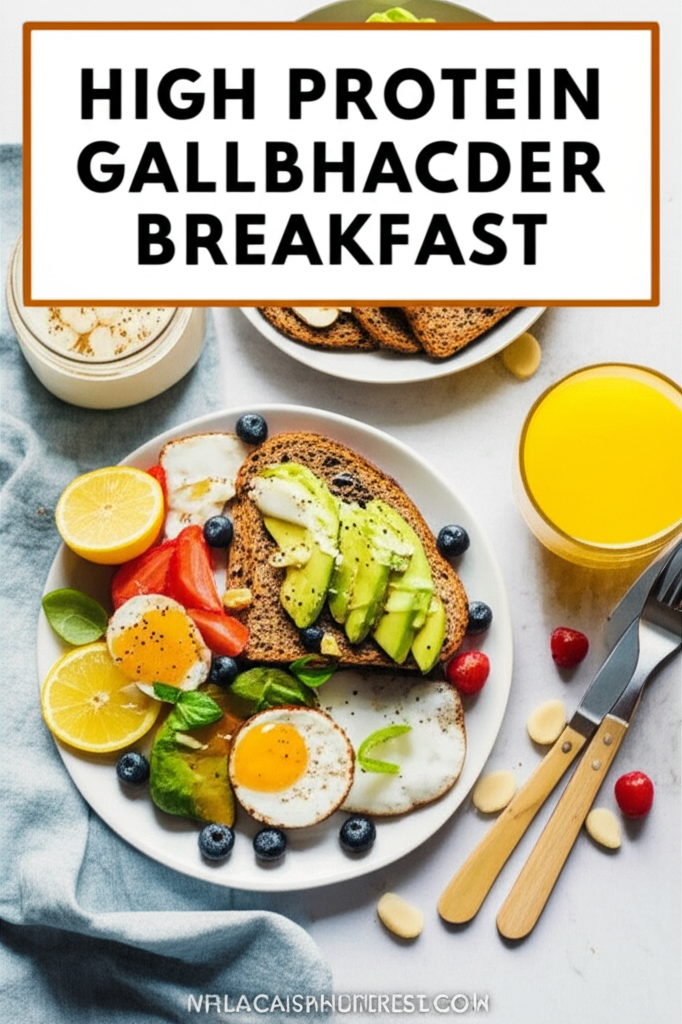
High protein breakfasts: what “gallbladder-friendly” really means
People hear “gallbladder-friendly” and assume bland food forever. Thankfully, that’s not the deal. Typically, it means:
- Lower fat per meal (often ~5–12g, depending on your tolerance)
- Lean protein (egg whites, nonfat Greek yogurt, cottage cheese, turkey, tuna)
- Gentle carbs (oats, rice cakes, whole-grain toast, fruit)
- Fiber, but not extreme (too much fiber suddenly can backfire for some people)
Also, weight loss still comes down to a calorie deficit. However, higher protein at breakfast can make that deficit feel less miserable. In many contexts, higher protein helps with satiety and body composition. It’s especially useful when it replaces refined carbs and high-fat extras. For a practical, evidence-based overview, I like this summary from Harvard’s Nutrition Source on protein. Harvard T.H. Chan: Protein. For another strong reference on dietary guidance, you can also review the Dietary Guidelines for Americans.
12 gallbladder-friendly recipe ideas (with macros + fat grams)
These are “real life” breakfasts I rotate when I want meals that won’t start my day with a heavy feeling. In particular, they’re protein-forward and keep fat reasonable. Macros are estimates and will vary by brand. Still, they’re close enough to plan with.
-
Egg white veggie scramble + toast
1 cup liquid egg whites, spinach, mushrooms, salsa + 1 slice whole-grain toast.
Macros: ~260 kcal | Protein: 30g | Carbs: 28g | Fat: 3g -
Nonfat Greek yogurt berry bowl
1 cup nonfat Greek yogurt + 1 cup berries + 1 tbsp honey (optional) + cinnamon.
Macros: ~240 kcal | Protein: 23g | Carbs: 38g | Fat: 0–2g -
Cottage cheese + pineapple + rice cakes
1 cup low-fat cottage cheese + 1/2 cup pineapple + 2 plain rice cakes.
Macros: ~330 kcal | Protein: 28g | Carbs: 44g | Fat: 4g -
Oatmeal protein “cream”
1/2 cup oats cooked in water + stir in 1 scoop whey isolate (or plant isolate) + banana slices.
Macros: ~380 kcal | Protein: 30g | Carbs: 55g | Fat: 5g -
Turkey breakfast wrap (low-fat)
Egg whites + deli turkey (look for low-fat) + tomato in a high-fiber tortilla.
Macros: ~320 kcal | Protein: 34g | Carbs: 35g | Fat: 6g -
Protein smoothie (no added fat)
1 scoop whey isolate + 1 cup skim milk (or unsweetened almond milk + extra scoop) + frozen mango + ice.
Macros: ~290 kcal | Protein: 32g | Carbs: 35g | Fat: 2–4g -
Smoked salmon “lite” bagel plate
1 thin bagel + 2 oz smoked salmon + fat-free Greek yogurt mixed with lemon/dill as “spread.”
Macros: ~360 kcal | Protein: 28g | Carbs: 52g | Fat: 6g -
Tofu scramble (minimal oil)
200g extra-firm tofu + turmeric + peppers/onion cooked in a nonstick pan with cooking spray.
Macros: ~300 kcal | Protein: 28g | Carbs: 12g | Fat: 12g -
Chicken congee (savory rice porridge)
1 cup cooked rice simmered into porridge + 3–4 oz shredded chicken breast + ginger + scallions.
Macros: ~390 kcal | Protein: 32g | Carbs: 60g | Fat: 4g -
Overnight oats + Greek yogurt (high protein)
1/2 cup oats + 3/4 cup nonfat Greek yogurt + 1/2 cup skim milk + strawberries.
Macros: ~420 kcal | Protein: 35g | Carbs: 63g | Fat: 4g -
Black bean egg-white breakfast bowl
3/4 cup black beans + egg whites + pico de gallo + chopped lettuce.
Macros: ~370 kcal | Protein: 32g | Carbs: 55g | Fat: 3g -
Tuna + lemon yogurt toast
Mix tuna in water with 2 tbsp nonfat Greek yogurt, lemon, pepper; serve on toast with cucumber.
Macros: ~310 kcal | Protein: 33g | Carbs: 32g | Fat: 3g
Small but useful tip: if you’re in a flare-y season, keep fat low at breakfast. Then “spend” more of your day’s fat later. When your digestive system is warmed up, many people tolerate it better. In practice, that pattern can help a lot (and I’ve leaned on it too). Even so, it isn’t a formal rule.
What should you avoid at breakfast if your gallbladder is sensitive?
Besides the obvious fried stuff, watch the “healthy” high-fat breakfast trends. For example, bulletproof coffee, big servings of nut butter, buttery croissants, greasy breakfast sandwiches, and giant avocado plates can hit hard. Also, full-fat cheese and sausage stacks can be rough. If you test these foods, change one variable at a time. That way, you can tell what bothered you.
For context, gallbladder disease is common. According to NIDDK (NIH), gallstones affect about 10–15% of adults in the U.S. NIDDK gallstones. Also, according to the CDC’s 2023–2024 obesity data, about 41.9% of U.S. adults have obesity. CDC: Adult obesity facts. Finally, a 2023 survey summary from the International Food Information Council (IFIC) reported that about 52% of Americans tried to lose weight in the past year. IFIC: 2023 Food & Health Survey. Also, according to a 2024 report from the National Center for Health Statistics (CDC), about 73.6% of U.S. adults are overweight (including obesity).

3-day sample menu (simple, high-protein, lower fat)
I build this like I build my own weeks. First, I repeat ingredients. Next, I keep cooking decisions minimal. Then, I lean on high protein breakfasts that don’t rely on added oils. Therefore, you’ll waste less food and spend less time thinking. Even better, you can batch-cook one or two proteins and reuse them.
Day 1
- Breakfast: Egg white veggie scramble + toast
- Snack (optional): Nonfat Greek yogurt + berries
- Lunch: Chicken congee (batch-cooked)
- Dinner: Turkey wrap with lettuce, tomato, mustard
Day 2
- Breakfast: Overnight oats + Greek yogurt + strawberries
- Snack (optional): Cottage cheese + pineapple
- Lunch: Black bean egg-white breakfast bowl (yes, I eat it at lunch too)
- Dinner: Baked white fish + rice + steamed carrots
Day 3
- Breakfast: Protein smoothie (no added fat)
- Snack (optional): Rice cakes + tuna lemon yogurt mix
- Lunch: Big salad with chicken breast (go easy on dressing)
- Dinner: Tofu scramble with potatoes (spray oil only)
Grocery list (built around the 3-day menu)
- Proteins: liquid egg whites, chicken breast, low-fat deli turkey, tuna in water, extra-firm tofu, nonfat Greek yogurt, low-fat cottage cheese, smoked salmon (optional)
- Carbs: rolled oats, whole-grain bread/thin bagels, rice, high-fiber tortillas, rice cakes, potatoes
- Fruits: berries (fresh or frozen), bananas, pineapple, mango (frozen)
- Veggies: spinach, mushrooms, peppers, onions, lettuce, cucumbers, carrots, scallions
- Flavor helpers: salsa/pico, lemon, dill, ginger, cinnamon, salt/pepper, mustard
- Dairy add-ins: skim milk (or unsweetened almond milk)
How I keep fat low without making breakfast depressing
First, I use nonstick cookware and cooking spray, not glugs of oil. Next, I treat sauces like “fat traps,” because they add up fast. For example, creamy dressings, mayo, and cheese can quietly double a meal’s fat. Instead, I’ll use salsa, mustard, lemon, vinegar, or fat-free Greek yogurt as a base. Finally, I’ll choose whey isolate when possible. It’s typically lower in fat and lactose than many blends.
One more note: if you’re losing weight quickly, talk to your clinician. Rapid weight loss can increase gallstone risk for some people. Because of that, many medical teams prefer steady loss over crash dieting. If symptoms feel intense (pain, fever, jaundice), don’t try to “food hack” it. Go get checked. For additional clinical background, you can also review guidance from Mayo Clinic: Gallstones.
Also, if you want a structured plan (and you do well with step-by-step guardrails), here’s one I’ve seen readers stick with. Because it removes decision fatigue, it can feel easier. At the same time, I don’t love anything that’s overly rigid. Still, some people genuinely thrive with a clear template.
Quick summary: If you want high protein breakfasts that are easier on the gallbladder, keep the meal’s fat moderate. Next, choose lean proteins. Then, build flavor with low-fat add-ons like salsa, lemon, and herbs. After that, start with 2–3 “default” breakfasts you actually like and repeat them. Finally, adjust fat upward only if you tolerate it.
[content-egg-block template=offers_list]
You Might Also Like

