
High-Protein Breakfasts: 10 Anti-Inflammatory Ideas for Weight Loss


High-protein breakfasts that are also anti-inflammatory usually land at 25–35g protein. Ideally, they include fiber-rich carbs and healthy fats, too. For example, think berries, oats, olive oil, eggs, yogurt, and salmon. As a result, you’ll stay full longer and ride out steadier energy. Plus, calorie control feels less like willpower and more like normal eating. Specifically, when breakfast has enough protein and low added sugar, you’ll notice fewer mid-morning snack attacks. In turn, your hunger cues feel more consistent.
Here’s the thing: I’ve watched people “eat healthy” at breakfast and still feel starving by 10:30 a.m. Often, the meal is sweetened coffee plus a muffin-shaped carb bomb. Meanwhile, when I switched my own mornings to protein-forward meals, my appetite finally calmed down. And I stopped pretending granola was a “protein source.” On top of that, meal prep got easier because I wasn’t chasing complicated recipes. Instead, I leaned on repeatable building blocks.
One tool that genuinely helped me stop “accidentally” overeating calorie-dense add-ons was a simple digital food scale. In my kitchen, nut butter was the main culprit. I didn’t use it forever. Instead, I used it long enough to learn what a real tablespoon looks like. That’s why, my portions became consistent and I didn’t feel restricted.
Also, quick reality check: anti-inflammatory eating isn’t a magic cleanse. Basically, it’s about more whole foods and less ultra-processed stuff. To make it practical, you’ll want berries, leafy greens, legumes, fatty fish, olive oil, nuts, seeds, and herbs and spices. At the same time, you’ll cut back on added sugars and refined oils. Interestingly, sugar still matters because it sneaks into “healthy” yogurts, cereals, and coffee drinks. For context, a 2024 CDC update notes most Americans consume more added sugar than recommended.
What makes high-protein breakfasts anti-inflammatory (and weight-loss friendly)?
To count as high-protein breakfasts in real life, I use a simple rule. First, aim for 25–35g protein. Then add at least 6–10g fiber. It’s not a scientific law. However, it’s a sweet spot I’ve seen work for appetite. For example, Greek yogurt plus berries plus chia hits the target fast.
Anti-inflammatory, meanwhile, is more about ingredients than a label. Specifically, you’re looking for foods linked with healthier inflammation markers over time. Extra-virgin olive oil, nuts, fish, fruits, vegetables, legumes, and whole grains fit well here. The Mediterranean-style pattern is one of the most studied. In fact, you can read a clear overview from Harvard T.H. Chan School of Public Health. For another solid overview, see the Cleveland Clinic’s Mediterranean diet guide.
Weight loss comes down to a calorie deficit. Still, protein makes that deficit easier because it’s filling and helps preserve lean mass. Notably, higher-protein intakes (often around 1.2–1.6 g/kg/day) link with better appetite control in research contexts. You can review the evidence summary via The American Journal of Clinical Nutrition. According to a 2024 survey by the Institute of Food Technologists (IFT), 71% of consumers say they’re trying to eat more protein. Also, research from the CDC NHANES program is widely cited for showing that only about 5% of U.S. adults meet daily fiber recommendations, which matters because fiber helps fullness.
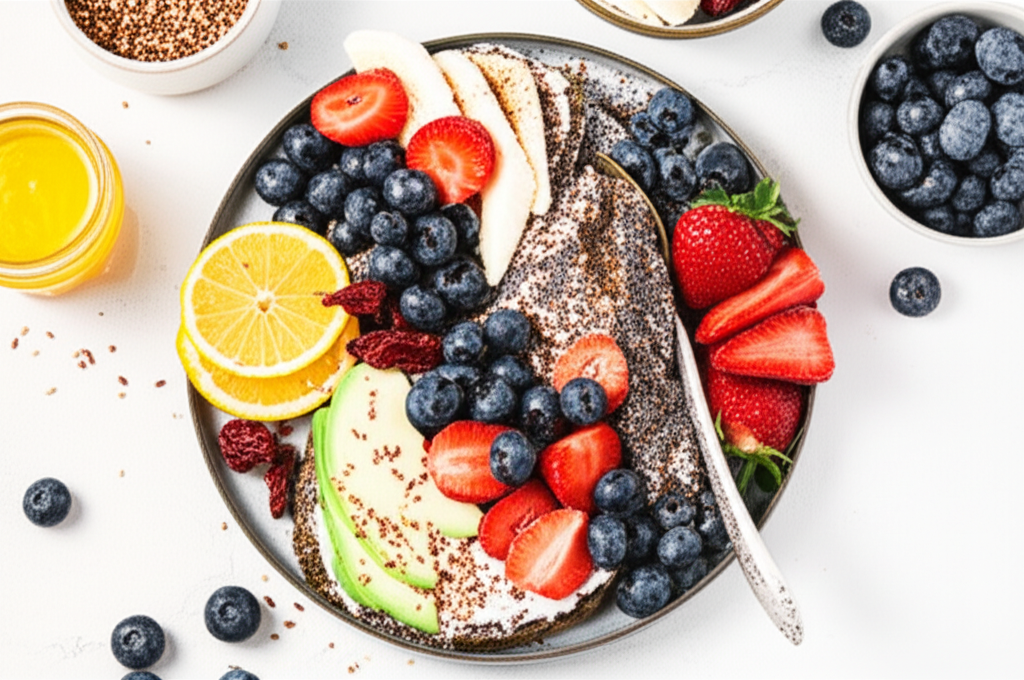
How protein + anti-inflammatory foods help satiety (without feeling like diet food)
Protein slows gastric emptying and influences hunger hormones. As a result, you feel satisfied longer. Meanwhile, fiber from oats, chia, flax, and berries adds volume and helps blunt blood sugar spikes. Plus, fats from nuts, seeds, avocado, and olive oil boost meal satisfaction. Let’s be real: dry egg whites alone aren’t making anyone happy.
I’m also picky about “protein” breakfasts that come with a sugar hangover. For example, you might eat a flavored yogurt bowl and feel hungry an hour later. Usually, the sugar-to-protein ratio drives that crash. Therefore, I choose unsweetened bases most of the time. Then I add sweetness with fruit, cinnamon, or vanilla. If I need it, I’ll add a small drizzle of honey.
10 quick high-protein breakfasts that are anti-inflammatory (with macros)
Important: Macros are estimates. Brands vary, and portion size matters. I’m listing typical servings that most people can assemble in 5–10 minutes. Alternatively, you can prep them ahead. According to a 2024 study by IFIC (International Food Information Council), 74% of consumers say price influences food and beverage choices. So, I’ve kept these ideas simple and repeatable.
1) Greek yogurt bowl with berries + chia
How: 1 cup plain 2% Greek yogurt + 1/2 cup mixed berries + 1 tbsp chia + cinnamon.
Macros (approx): 320 kcal | 30g P | 30g C | 9g F
2) Egg scramble with spinach + olive oil + feta
How: 2 whole eggs + 1/2 cup egg whites, sautéed spinach in 1 tsp extra-virgin olive oil, sprinkle feta.
Macros (approx): 330 kcal | 33g P | 6g C | 20g F
3) Cottage cheese “savory bowl” with tomatoes + cucumbers + pumpkin seeds
How: 1 cup low-fat cottage cheese + chopped tomato/cucumber + 1 tbsp pumpkin seeds + black pepper + oregano.
Macros (approx): 300 kcal | 28g P | 12g C | 14g F
4) Overnight oats with protein powder + blueberries
How: 1/2 cup rolled oats + 1 scoop whey/plant protein + 3/4 cup milk of choice + blueberries + cinnamon.
Macros (approx): 420 kcal | 35g P | 52g C | 9g F
5) Smoked salmon + avocado rice cake stack
How: 2 brown rice cakes + 3 oz smoked salmon + 1/4 avocado + lemon + dill.
Macros (approx): 360 kcal | 25g P | 28g C | 16g F
6) Tofu scramble with turmeric + peppers
How: 200g firm tofu crumbled, cooked with turmeric, garlic, peppers, and a splash of olive oil.
Macros (approx): 340 kcal | 26g P | 14g C | 20g F
7) Protein smoothie (not a sugar bomb)
How: 1 scoop protein + 1 cup unsweetened kefir (or milk) + 1/2 banana + 1 tbsp ground flax + handful spinach.
Macros (approx): 400 kcal | 35g P | 35g C | 12g F
8) Turkey + hummus breakfast wrap
How: Whole grain wrap + 3–4 oz turkey breast + 2 tbsp hummus + greens + sliced cucumber.
Macros (approx): 430 kcal | 35g P | 40g C | 14g F
9) Lentil “breakfast bowl” with egg + arugula
How: 3/4 cup cooked lentils + 1–2 eggs + arugula + lemon + 1 tsp olive oil.
Macros (approx): 440 kcal | 30g P | 40g C | 18g F
10) Chia pudding + skyr + strawberries
How: Chia pudding (2 tbsp chia + 3/4 cup milk) topped with 3/4 cup plain skyr + strawberries.
Macros (approx): 390 kcal | 32g P | 30g C | 14g F
Notice what’s missing? Sugary cereal, juice, and “protein” bars that are basically candy with a gym selfie. Besides, you don’t need perfection. You just need repeatable meals you actually like.
What should you buy? A simple grocery list for the week
I keep this list boring on purpose. Because boring lowers decision fatigue, it’s actually helpful. Even better, boring means you’ll actually use it.
- Proteins: eggs, egg whites, plain Greek yogurt or skyr, cottage cheese, tofu, turkey breast slices, smoked salmon, protein powder
- Fiber carbs: rolled oats, lentils (canned or dry), whole grain wraps, berries (fresh/frozen), bananas
- Fats + anti-inflammatory extras: extra-virgin olive oil, chia seeds, ground flax, pumpkin seeds, avocado
- Veg + flavor: spinach, arugula, peppers, tomatoes, cucumbers, lemons, garlic, turmeric, cinnamon, dill/oregano
- Optional: unsweetened kefir, hummus, feta
If you’re trying to lose weight, I’d also grab plain yogurt and a big bag of frozen berries. That combo saves breakfast when your schedule gets messy. Plus, it can curb dessert cravings more often than you’d think.
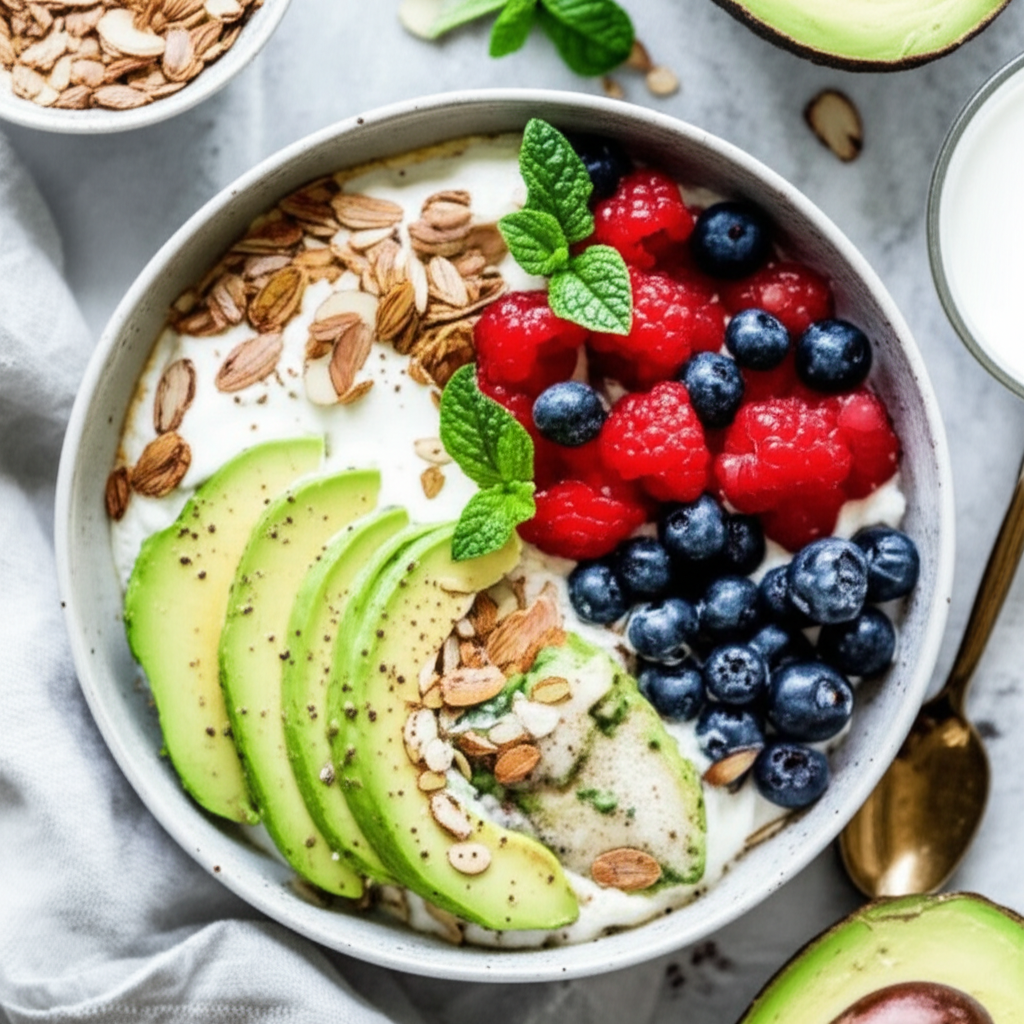
To strengthen the routine, you can also pin a few “default” add-ins like chia, flax, and olive oil. That way, you won’t feel like you’ve gotta reinvent breakfast every day.
Need dairy-free or gluten-free? Here are easy swaps
Dairy-free: Use soy yogurt or coconut yogurt (watch the sugar). Swap whey for plant protein. Use tofu scramble. Then pick unsweetened almond or soy milk for oats. Also, tahini can replace feta vibes in savory bowls. If you’re unsure, you can compare labels using guidance from the FDA Nutrition Facts label overview.
Gluten-free: Choose certified GF oats. Use corn tortillas or GF wraps. Swap whole grain toast for potatoes or rice cakes. Then double-check flavored proteins and sauces. Because of this, you’ll avoid the “mystery gluten” that sneaks into spice blends and marinades.
Egg-free: Tofu scramble is your best friend. What’s more, a soy-based protein smoothie can hit 30g protein easily. You’ll just need the right powder and a solid liquid base.
Meal prep tips that actually work on busy mornings
I’m not a fan of Sunday meal prep that takes three hours. It wrecks your kitchen and your mood. Instead, I do “prep the pieces.” It’s faster, and it won’t feel like a second job. Better yet, you’ll still eat the food on Wednesday.
- Batch cook lentils: Make 3–4 cups cooked. Then scoop 3/4 cup portions into containers.
- Overnight oats assembly line: Make 3 jars at once. Use cinnamon and berries for sweetness.
- Wash greens immediately: If greens are ready, you’ll use them. If they’re slimy in a drawer, you won’t.
- Pre-portion seeds: Put chia, flax, and pumpkin seeds into tiny containers or snack bags.
By the way, there’s a reason I like measuring add-ins at first. Seeds and nut butters are healthy, but they’re also easy to overdo. So a scale keeps you honest. At the same time, it doesn’t need to make you obsessive.
How to spot hidden added sugars (so your breakfast doesn’t backfire)
Added sugar hides in “vanilla” yogurt, granola, oat milk, protein shakes, and flavored cottage cheese. First, check the label for added sugars in grams. Next, scan ingredients for cane sugar, syrups, or dextrose. It’s all sugar in a trench coat, just with different names. If you want a quick refresher, the American Heart Association’s added sugars guide breaks it down well.
As a practical rule, I try to keep breakfast added sugar under 5g most days. If I want something sweeter, I’d rather use fruit and cinnamon. Besides, your taste buds adapt faster than you’d expect. So you won’t miss the extra sweetness for long.
My quick “build-a-breakfast” formula (when you don’t want a recipe)
When I’m tired of deciding, I use this template. It’s simple, and it works even on rushed mornings.
- Protein: 25–35g (Greek yogurt/skyr, eggs + whites, tofu, turkey, protein powder)
- Fiber: berries, oats, lentils, greens, chia/flax
- Fat: olive oil, seeds, avocado, salmon
- Flavor: cinnamon, turmeric, lemon, herbs, pepper
Do that, and you’ll end up with satisfying breakfasts that keep you full. Also, your grocery list stays tight. That makes the whole routine cheaper and easier to repeat.
Helpful stat for perspective: Most adults don’t hit fiber targets. The U.S. recommendation is 14g of fiber per 1,000 calories. That’s roughly 25–38g per day for many people. Therefore, adding chia, berries, oats, lentils, and greens in the morning can move the needle quickly.
Another stat I keep in mind: FDA’s Daily Value for protein is 50g/day. It’s a general reference and it isn’t a personalized target. Still, if you start your day with around 30g, you’re in a good place by lunchtime.
One more data point: According to a 2024 IFIC Food & Health Survey, 74% of consumers say price influences food and beverage choices. So, keeping these meals simple isn’t just convenient—it’s realistic.
[content-egg-block template=offers_list]
Summary: what to do tomorrow morning
Pick one of the 10 ideas above and make it repeatable. Then keep added sugar low and aim for 25–35g protein. Next, add one anti-inflammatory booster like berries, olive oil, turmeric, chia, or leafy greens. Once you’ve got two go-to high-protein breakfasts, weight loss tends to feel a lot less chaotic. You’ll also spend less time negotiating with yourself at 10 a.m.
You Might Also Like

