
Low Histamine Snacks: 15 High-Protein Ideas for Weight Loss


If you’re trying to lose weight and keep histamine symptoms calm, low histamine snacks can make your life a lot easier. Basically, the idea is simple. Instead of relying on “mystery” processed foods, choose fresher options. Then keep leftovers on a short leash, and stick to proteins that aren’t aged or fermented.
Below, you’ll find 15 snack ideas with rough calories and protein. Alongside that, I’m sharing the storage tricks I use so histamine doesn’t creep up on day two. Most importantly, you’ll be able to snack without guessing.
I learned this the annoying way. At first, when I tried “high-protein snacking,” I leaned on tuna packs, jerky, and yogurt. My protein was great… and my face wasn’t. So I started building snacks around freshness, freezing, and boring (but reliable) proteins. Honestly, it worked better than I expected.
Before we get into the list, here’s one practical tip: if you don’t already own a small digital food scale, it’s worth it. I use mine when I’m cutting calories, because eyeballing “two ounces of turkey” turns into “half the package” really fast. As a result, portioning correctly makes the protein numbers below actually mean something.
What are low histamine snacks (and why do they matter for weight loss)?
Low histamine snacks are snacks built from foods that are typically lower in histamine and aren’t known for triggering histamine release in sensitive people. In practice, they’re usually fresh (not aged or fermented), minimally processed, and stored in a way that limits histamine buildup. For weight loss, they help because you can keep protein high for better satiety. At the same time, you’ll avoid flare-ups that can derail planning and consistency.
Histamine intolerance is messy and individual, so I’m not going to pretend there’s one “perfect” list. Still, many clinicians and dietitians recommend limiting aged cheeses, cured meats, alcohol, fermented foods, and fish that isn’t very fresh. If you want a solid medical overview, Cleveland Clinic has a helpful explainer on histamine intolerance and symptoms: Cleveland Clinic: Histamine Intolerance. For more detail on how histamine works in the body, you can also check NHS: Allergies (overview).
Low-histamine principles I actually use day to day
Here’s the short version I follow, and it’s saved me a lot of guesswork. First, I prioritize freshly cooked meat and freeze extras immediately. Next, I avoid “slow snacking” on leftovers that have sat in the fridge for days. Finally, I keep a tiny rotation of safe-ish staples so I’m not experimenting when I’m hungry.
Also, it helps to know that histamine can increase as protein foods sit around. It’s not just what you eat. It’s how old it’s. That’s why meal prep can be tricky for this niche. So, freezing is your best friend.
Quick stat worth knowing: a higher-protein diet often improves fullness and can support fat loss when calories are controlled. For example, a review in the American Journal of Clinical Nutrition found higher protein intakes increase satiety and help preserve lean mass during weight loss: AJCN: Protein and satiety/weight loss. On top of that, research from the International Food Information Council (IFIC) found that 63% of Americans say they’re trying to consume more protein (2024 Food & Health Survey): IFIC: 2024 Food & Health Survey. Meanwhile, according to a 2024 survey by IFIC, 15% of Americans report following a low-carb eating pattern (including keto): IFIC: 2024 Food & Health Survey (diet patterns).
15 high-protein low histamine snacks for weight loss
Numbers below are approximate and will vary by brand and portion. To keep it simple, I’m listing serving sizes that work well for a snack (not a full meal). Then, I’ll include calories and protein so you can plug them into your day without doing math gymnastics.
-
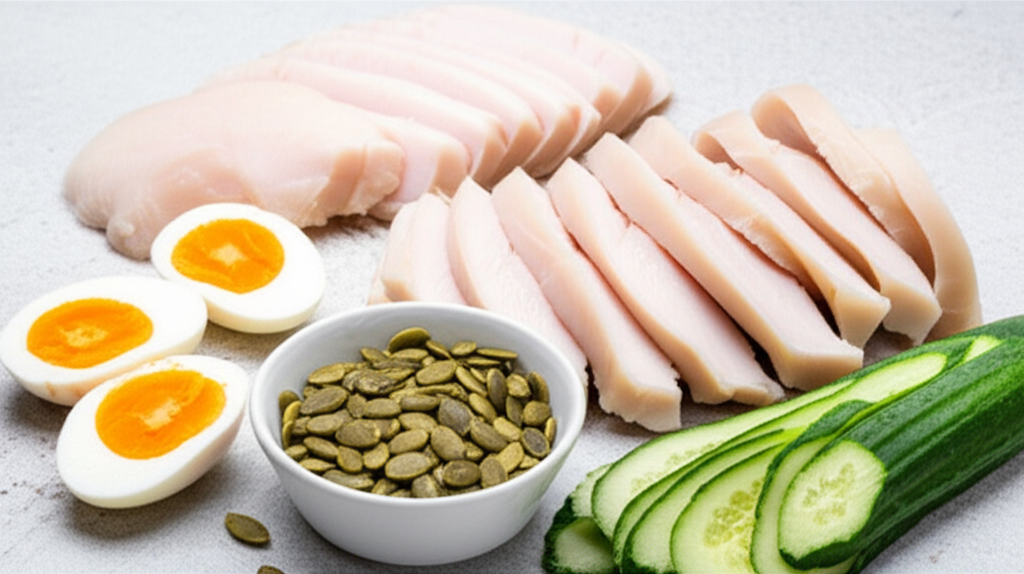
Fresh-cooked chicken breast slices + cucumber
Serving: 3 oz chicken + 1 cup cucumber
Approx: ~140–160 kcal, ~26 g protein
Tip: Cook chicken, cool quickly, portion, and freeze. -
Turkey patties (pan-seared) with salt
Serving: 3 oz cooked turkey
Approx: ~160–190 kcal, ~22–26 g protein
Tip: Skip pre-seasoned mixes if spices bother you. Keep it simple. -
Hard-boiled eggs + sliced pear
Serving: 2 eggs + 1 small pear
Approx: ~240 kcal, ~12–13 g protein
Tip: Peel right before eating. It’ll keep the texture better. -
Egg white “mini muffins” (egg whites + zucchini)
Serving: 3 egg whites baked with grated zucchini
Approx: ~90–110 kcal, ~11 g protein
Tip: Bake, cool, freeze in a single layer, then bag. -
Cottage cheese (if tolerated) + blueberries
Serving: 1/2 cup cottage cheese + 1/2 cup blueberries
Approx: ~140–170 kcal, ~12–14 g protein
Tip: Choose the freshest date possible. Dairy tolerance varies. -
Skyr or Greek yogurt (if tolerated) + honey drizzle
Serving: 170 g yogurt + 1 tsp honey
Approx: ~130–170 kcal, ~15–18 g protein
Tip: If yogurt is a trigger, swap to a shake option below. -
Homemade protein “shake” with pea protein + rice milk
Serving: 1 scoop pea protein + 1 cup rice milk
Approx: ~170–230 kcal, ~20–25 g protein
Tip: Keep the ingredient list short. Flavorings can be sneaky triggers. -
Air-fried chicken tenderloins
Serving: 3 oz cooked
Approx: ~130–160 kcal, ~25 g protein
Tip: Make a batch, then freeze “snack packs” of 3 oz. -
Fresh pork loin cubes + apple slices
Serving: 3 oz pork loin + 1 small apple
Approx: ~220–260 kcal, ~22–25 g protein
Tip: Pork is underrated as a snack protein. It reheats well, too. -
Ricotta bowl (if tolerated) + cinnamon
Serving: 1/2 cup part-skim ricotta
Approx: ~170–200 kcal, ~12–14 g protein
Tip: Works when you want something “dessert-ish” without chaos. -
Edamame (only if you tolerate soy) with sea salt
Serving: 3/4 cup shelled edamame
Approx: ~150–170 kcal, ~13–14 g protein
Tip: Buy frozen and microwave. It’s fast, consistent, and hard to mess up. -
White bean mash (if tolerated) on rice cakes
Serving: 1/2 cup mashed white beans + 2 rice cakes
Approx: ~230–270 kcal, ~10–12 g protein
Tip: Use freshly cooked beans or well-tolerated canned. Tolerance varies. -
Freshly cooked shrimp (only if very fresh and tolerated)
Serving: 4 oz cooked shrimp
Approx: ~120 kcal, ~24 g protein
Tip: Seafood can be tricky with histamine. If you react, skip it. -
“Snack plate” of chicken + carrots + olive oil
Serving: 3 oz chicken + 1 cup carrots + 1 tsp olive oil
Approx: ~190–220 kcal, ~26 g protein
Tip: This is my go-to when I’m starving and need real food. -
Gelatin protein cup (unflavored gelatin + juice you tolerate)
Serving: 1 tbsp gelatin (about 9 g protein) made into a cup
Approx: ~40–80 kcal, ~9 g protein
Tip: Great when you want protein but can’t face another meat snack.
Notice what’s missing? A lot of “typical” diet snacks: jerky, deli meats, tuna packs, aged cheese sticks, kombucha, and anything fermented. Those can be convenient. However, they’re common troublemakers for many people watching histamine.
How do you keep histamine low when meal prepping high-protein snacks?
This is the make-or-break section. You can eat “perfect” foods and still feel awful if your storage habits are working against you. So here’s what I do, specifically.
-
Cook, cool, freeze. If I cook chicken or turkey, I portion it within about 30–60 minutes of cooling and freeze it. Then I thaw a portion overnight when needed. That way, it doesn’t linger in the fridge.
-
Keep fridge leftovers on a tight timeline. Many people with histamine intolerance do better with same-day or next-day leftovers. If day two feels risky for you, freeze on day one. In other words, don’t “test your luck” with old protein.
-
Buy meat as fresh as you can. If the package is close to the sell-by date, I’ll pass. It’s simple and not glamorous. Still, it matters.
-
Avoid “slow thawing” on the counter. Thaw in the fridge overnight or use cold water. Warm countertops are a histamine party you didn’t RSVP to. So don’t give bacteria extra time.
-
Be careful with fish and seafood. Histamine can build fast in fish. The FDA notes that time/temperature handling is a key driver of histamine (scombrotoxin) formation in fish: FDA: Scombrotoxin (histamine) in fish. If seafood has ever triggered you, don’t force it for the macros. Instead, lean on poultry or eggs.
Another helpful stat, since weight loss is the goal here: the CDC reports that adult obesity in the U.S. is 41.9% (2017–March 2020). That’s not to scare you. Rather, it’s to say you’re not alone in wanting simple systems that actually stick: CDC: Adult Obesity Facts. Also, a 2024 IFIC survey found 63% of Americans say they’re trying to consume more protein: IFIC: 2024 Food & Health Survey. In other words, lots of people want higher protein, but not everyone tolerates common “convenience” options.

My “boring but effective” snack planning method
I plan snacks like I plan outfits when I’m traveling: repeat what works. First, I pick two proteins for the week (usually chicken and eggs). Then, I pick two crunch sides (cucumber, carrots) and one sweet side (pear or blueberries). After that, I portion everything so it’s grab-and-go. As a result, I don’t have to negotiate with myself at 4 p.m.
On top of that, I keep one emergency option on hand for days when cooking isn’t happening: a simple pea protein powder that I tolerate. Then I mix, drink, and move on. It’s not a vibe, but it prevents “I’m so hungry I’ll eat random stuff” moments. Most importantly, it keeps my plan intact.
For protein targets, you can also sanity-check your daily needs with a reputable calculator. For example, the Harvard Health explainer is a helpful starting point, and NIH (StatPearls) offers more clinical context.
Summary: keep protein high, keep food fresh, and freeze early
Weight loss gets easier when your snacks don’t trigger symptoms and don’t blow up your calories. Start with low histamine snacks built around fresh-cooked proteins, simple produce, and smart storage. Most importantly, don’t “meal prep like a normal person” if leftovers are a problem. Portion and freeze instead. Your body will tell you what’s working.
[content-egg-block template=offers_list]
You Might Also Like

